2025/12/10
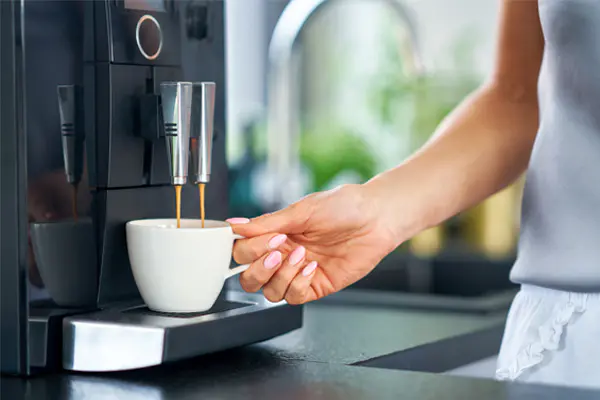
A coffee machine is a specialized appliance or device used to brew coffee. Its core function is to extract flavor compounds from coffee grounds (or capsules/pods) using water, producing a ready-to-drink coffee beverage.
Ranging from simple manual tools to highly automated machines, there is a wide variety of coffee makers, each with different working principles and final products.
Main Categories and Working Principles
Coffee machines can be primarily classified by their degree of automation and their extraction principle.
1. Classification by Automation Level
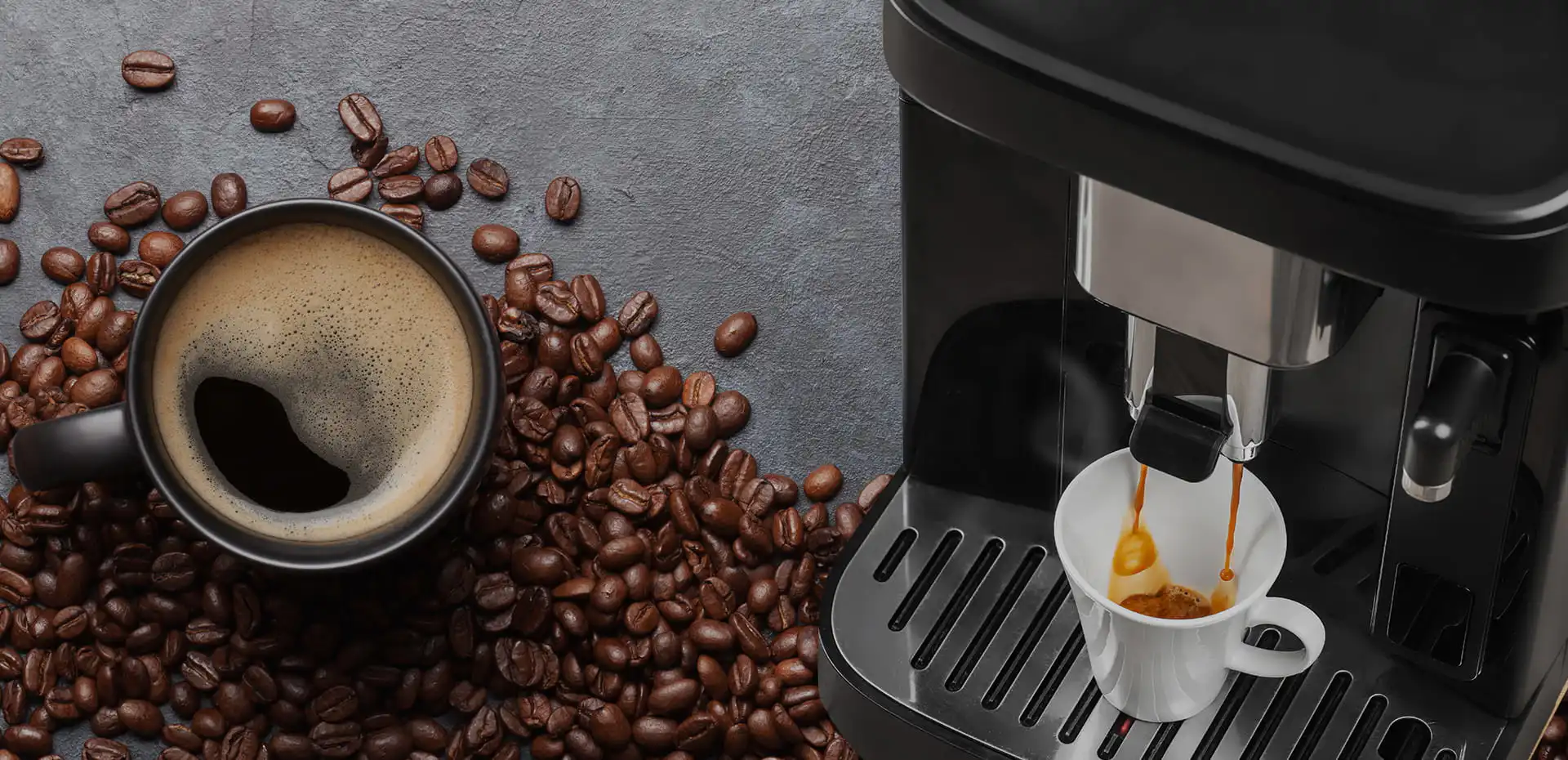
Fully Automatic Coffee Machine
Features: One-touch operation. Built with an integrated grinder, the user only needs to add coffee beans and water, select a menu option (e.g., espresso, americano, cappuccino), and the machine automatically completes the entire process of grinding, tamping, extraction, and even milk frothing (on some models).
Advantages: Extremely convenient and fast, highly standardized, suitable for homes, offices, and high-traffic commercial settings.
Disadvantages: Low customizability and room for experimentation, cleaning and maintenance are relatively complex.
Semi-Automatic Espresso Machine
Features: The mainstream choice for coffee enthusiasts. The machine's main responsibilities are to provide stable high-temperature, high-pressure hot water and steam. Critical steps like grinding, dosing, tamping, controlling extraction time, and steaming milk are all performed manually by the user.
Advantages: Offers maximum control and freedom, allowing for fine-tuning of various parameters (dose, grind size, tamping pressure, extraction time) to explore different flavors. It is the core equipment for making authentic espresso.
Disadvantages: Requires a certain learning curve and skill, involves more operational steps.
Capsule/Pod Coffee Machine
Features: Uses pre-portioned coffee capsules/pods from specific manufacturers. The user inserts the capsule, presses a button, and the machine pierces the capsule and injects water at a specific pressure and temperature for extraction.
Advantages: Simplest operation, easy cleaning, consistent quality, wide variety of flavor options.
Disadvantages: Long-term capsule costs are higher, generates packaging waste, and machines are often brand-locked (incompatible with capsules from other brands).
Drip Coffee Maker (American Coffee Machine)
Features: The most common household coffee machine. The principle involves slowly showering hot water over coffee grounds, allowing the coffee liquid to drip down by gravity. Typically used to brew a pot of American-style black coffee.
Advantages: Affordable, simple to operate, can make multiple cups at once.
Disadvantages: Typically operates at low pressure, cannot make espresso or its derivatives (like lattes, cappuccinos).
2. Classification by Extraction Principle
High-Pressure Extraction (Espresso Machine)
Uses a pump (vibratory or rotary) to generate high pressure of around 9 bars, forcing very hot water quickly through finely-ground, compacted coffee puck. This rapidly extracts a concentrated, viscous espresso topped with Crema (a golden-brown foam). This is the base for milk-based drinks like lattes and cappuccinos.
Machine Types Included: Semi-automatic, fully automatic, and some capsule machines.
Drip/Immersion Brewing (Drip Coffee Maker)
Utilizes gravity or atmospheric pressure/immersion, allowing hot water to contact coffee grounds for a longer period for a slower extraction. The resulting coffee is milder in body, closer in style to pour-over coffee.
Machine/Tool Types Included: Drip coffee makers, French presses, pour-over brewers (the latter two are often categorized as coffee "brewers" or "tools" rather than "machines").
Centrifugal Force (A few high-end models)
Employs high-speed rotation, using centrifugal force to "spin" water through the coffee grounds for extraction. This is a relatively newer technology.
Core Application Scenarios
Household Use: Drip coffee makers, capsule machines, and fully/semi-automatic espresso machines are increasingly popular.
Commercial & Food Service: Cafés, restaurants, and hotels widely use semi-automatic or fully automatic espresso machines as core equipment.
Office Environments: Fully automatic coffee machines, capsule machines, and large drip coffee makers are mainstream choices.
Key Factors for Choosing a Coffee Machine
Budget: Price ranges widely, from basic drip makers costing a few hundred yuan to commercial machines costing tens of thousands.
Coffee Taste Preference: Lovers of espresso and milk-based drinks (latte, etc.) must choose an espresso machine; those who only drink black coffee can consider drip machines, pour-over methods, or the black coffee function on fully automatics.
Frequency of Use & Convenience Needs: For high frequency and pursuit of ultimate convenience, choose fully automatic or capsule machines; for those who enjoy the process and pursue quality/experimentation, choose semi-automatic.
Space & Maintenance: Consider kitchen counter space and willingness to spend time on cleaning and upkeep (semi-automatics require daily cleaning).
 English






 +86-13968281299
  No. 138, Huixiang'an Road, Zhouxiang Town, Cixi City, Zhejiang Province
